A new study reveals the presence of leprosy in the Americas before the arrival of Europeans

In the past yearsMany believe that the bacteria known as Mycobacterium leprae It caused leprosy and it only spread to America through early European explorers and settlers.
However, the discovery of a second bacterium puts the theory of blaming the settlers on its head, as a strain was already present on the continents calling the New World home.

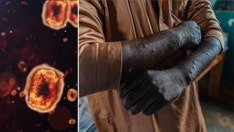
The Pasteur Institute in Paris announced that it had found a second type of bacteria responsible for the disease in the Americas. (Netflix/Paramount)
Bacteria Mycobacterium leprosy Researchers say the virus had been around and infecting humans for a thousand years before Europeans arrived.
“It changes everything about leprosy in the Americas,” said Dr. Maria Lopopoulou, first author of the study and a researcher in the Laboratory of Paleomicrobial Genomics at the Pasteur Institute.
“This discovery changes our understanding of the history of leprosy in America. It shows that a form of the disease was already endemic among indigenous populations long before Europeans arrived,” she said in the statement.

The study was conducted by scientists at the Pasteur Institute in Paris, along with the French National Center for Scientific Research and the University of Colorado. (Istock)
The study – conducted by scientists from the Laboratory of Ancient Microbial Genomics at the Pasteur Institute, along with the French National Center for Scientific Research and the University of Colorado in the United States – began after… Mycobacterium leprosy It was found in a Mexican patient in 2008, and in red squirrels in the British Isles in 2016.
Using advanced genetic techniques to reconstruct the genome Mycobacterium leprosy Of ancient individuals from Argentina and Canada, scientists found that the two lineages from different regions were genetically close together in… Mycobacterium Genome family tree, meaning that the bacteria spread rapidly across the continent.
The statement stated that the results confirmed this Mycobacterium leprosy It has already spread throughout North and South America.

The researchers were able to study more than 800 different DNA samples from ancient human remains and modern medical cases that showed signs of leprosy. (Istock)
The researchers worked in collaboration with indigenous communities, various international institutions and archaeologists, according to the statement, and were able to study more than 800 artifacts. DNA samples From ancient human remains and modern medical cases showing signs of leprosy.
Nicholas Rascovan, lead author of the study in Pasteur InstituteHe said the research proves that human history can be changed.
“We are only beginning to uncover the diversity and global movements of this recently identified pathogen,” he said. “This study allows us to hypothesize that there may be unknown animal reservoirs.”
CLICK HERE TO GET THE FOX NEWS APP
the Centers for Disease Control and Prevention The CDC says leprosy can affect patients’ nerves, skin and eyes, and is treated with antibiotics. Up to 225 people in the United States, and 250,000 worldwide, develop Hansen’s disease, according to the CDC.
Nick Butler is a Fox News digital correspondent. Do you have any tips? Contact Nick.Butler@Fox.com.
Related article














Post Comment