Archaeologists have discovered a 2,000-year-old temple in an Iron Age settlement in Denmark
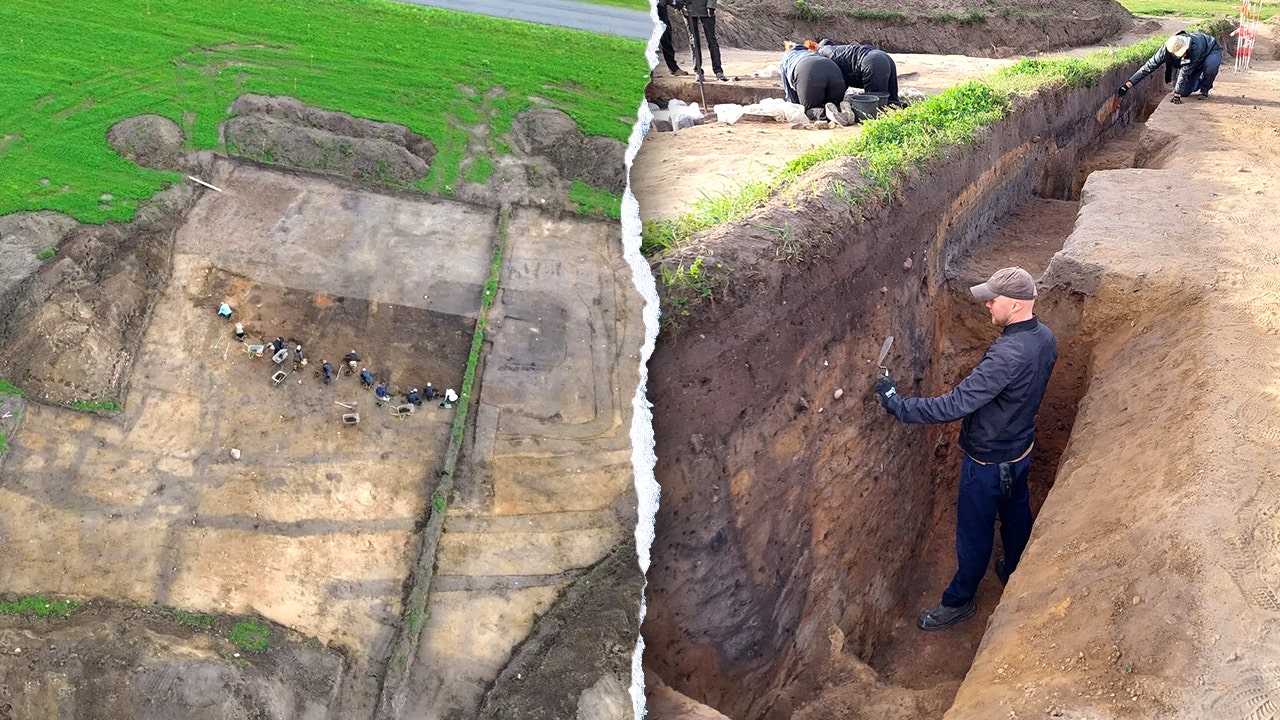
The Museum of Central Jutland (Midtjylland Museum) has revealed the discovery of the temple at Hedegaard, an ancient site containing the “largest and richest burial site” in Scandinavia, according to its website. The latest excavation work began last August.
Hedegaard, located near Estrovolm north of the Skierne River, has been identified as the largest settlement in Denmark from the time “around the birth of Christ,” the museum said.
Working with researchers from the Horsens Museum and the Mosgaard Museum, archaeologists found evidence of an extensive fortified settlement that served as a regional power center during the Iron Age.
The settlement produced luxury goods, weapons from the Celtic tribes and “prestigious” items from them Roman workshops.
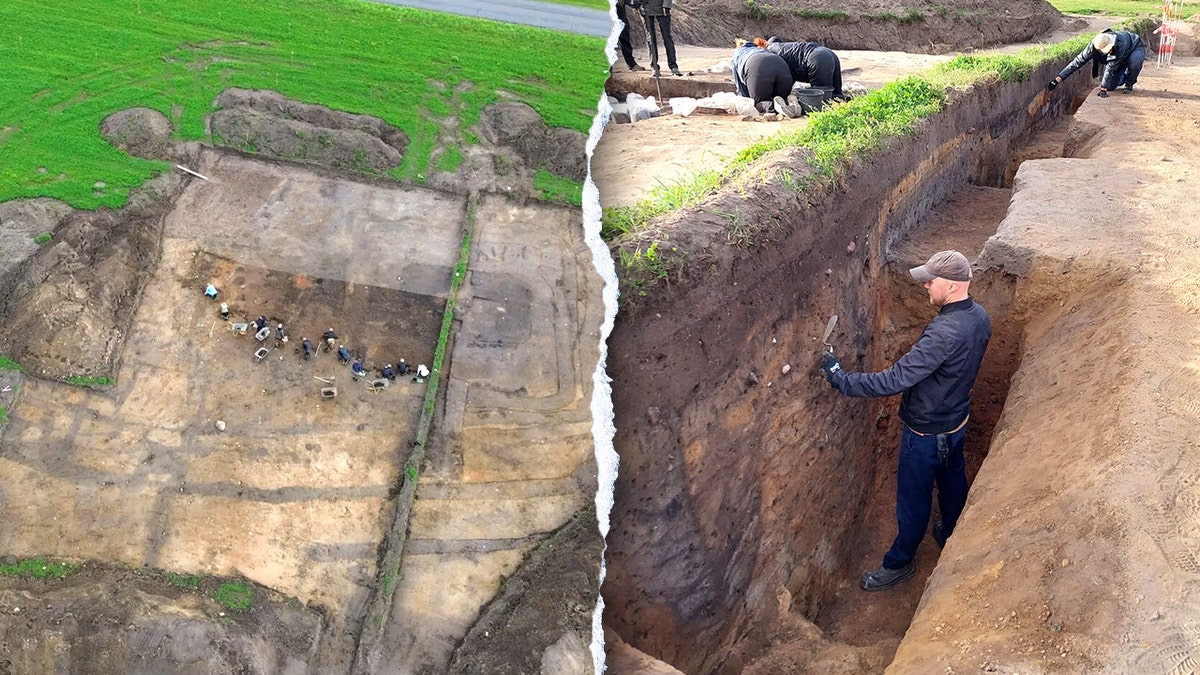
Archaeologists in Denmark have unearthed a 2,000-year-old temple at Hedegaard, a site identified as a major Iron Age power center. (Central Jutland Museum)
Evidence shows that the settlement “flourished in the period before the birth of Christ.”
“This is when we see the rich graves and the numerous weapon graves in the cemetery located north of the village,” the museum said.
Dog walkers launch an archaeological race to preserve 2,000-year-old footprints in quicksand
But the crown jewel of the excavation was the temple, which measures about 49 by 53 feet.
“The structure likely appears as a tall, almost square, tower-like building with external columns.”
The temple once burned down. Beneath the cremation layer, excavators found traces of two “temple phases” that provide insight into its history.
“In the exact center there was a raised mud platform (6 x 6 feet),” officials said.
“In the later phase, a decorative hearth was built here, partly covering the earlier one. The smaller temple was moved about (30 inches) north compared to the older one, but was almost identical. The older hearth remained intact – the new temple was simply built over it.”
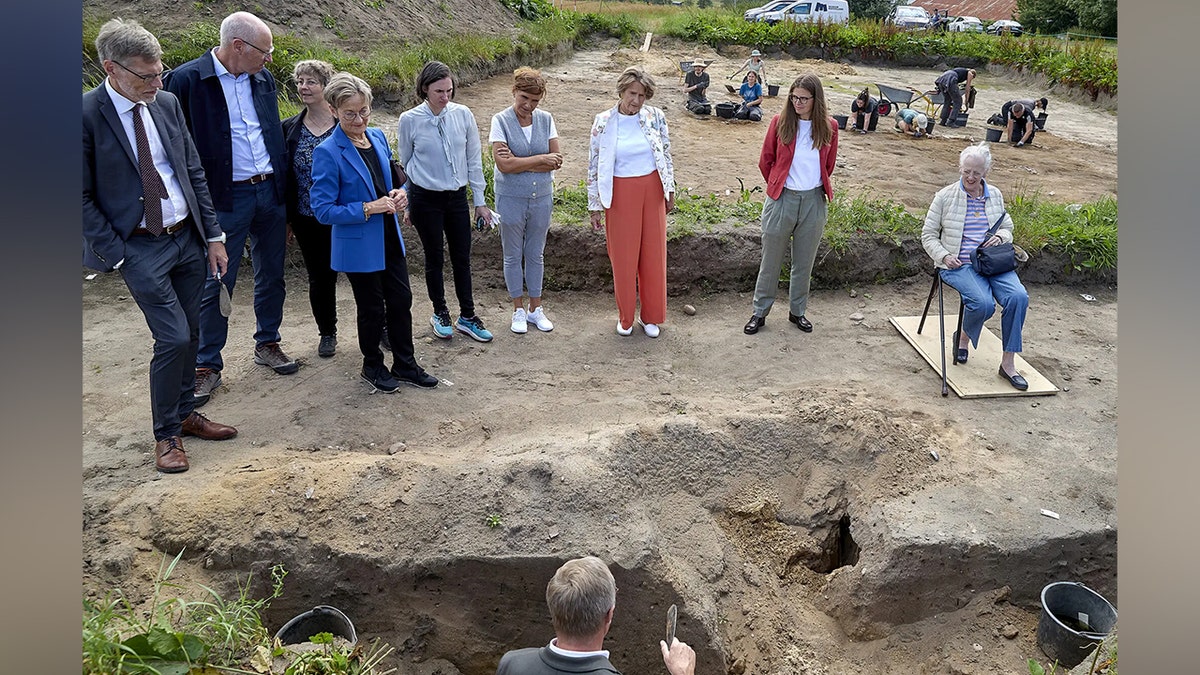
The pagan temple was built between 50 BC and 50 AD, according to the curator of antiquities. (Central Jutland Museum)
Archaeologists also found fragments of plaster indicating that the temple walls were previously painted white.
“Preliminary findings indicate that the temple was operational in the decades following the 20th century Birth of Christ“, the site stated.
“The structure likely appears as a tall, almost square, tower-like building with external columns. The hearth dominated the interior space.”
Test yourself with our latest lifestyle quiz
The museum also said: “The temple was carefully decontaminated before it was deliberately burned, and only a few finds remain. However, two exceptional glass beads were discovered, which were likely produced in the Middle East or Egypt.”
The site has been a subject of scientific interest since Danish archaeologists discovered an unusual number of richly decorated graves in the late 1980s.
“Christianity did not reach Scandinavia until about 1,000 years later.”
“It remains unique in Northern European archaeology – an early and unprecedented display of military, economic and religious power,” the museum statement said.
Martin Winther Olsen, curator of antiquities, said that since the site was discovered more than three decades ago, archaeologists have known that the site was “something completely different.”
Click here to subscribe to our lifestyle newsletter
“When our geophysical surveys revealed the presence of a fortification in the village, it was clear that this was out of the ordinary,” he noted.
Olsen identified the temple as a Pagan structureWhich was built in the period between 50 BC and 50 AD
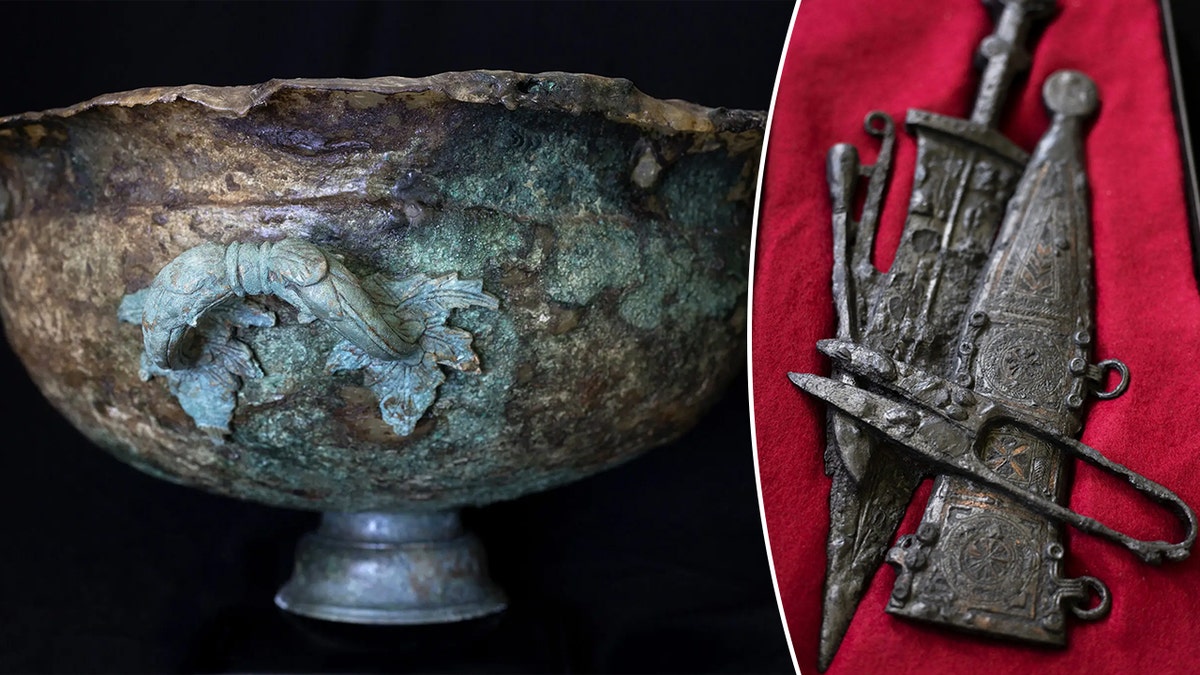
The richly decorated graves and numerous weapons burials north of the settlement first caught the attention of scholars in the late 1980s. (Central Jutland Museum)
“Christianity did not reach Scandinavia until about 1,000 years later,” he said, adding that Hedgard had “extensive foreign connections” including knowledge of history. Celtic and Roman Architectural traditions.
Evidence seems to suggest that Hedegård was in use for only three generations before it disappeared.
Click here for more lifestyle stories
Olsen said all the evidence proves that Hedegaard had “everything needed to be a power center in the Early Iron Age,” and said he could talk about the site “for two hours straight.”
“The site is strategically located and controls the most important route through Jutland,” the expert said. He added: “There is clear militarization in the form of weapons, but also in the construction of fortifications.”
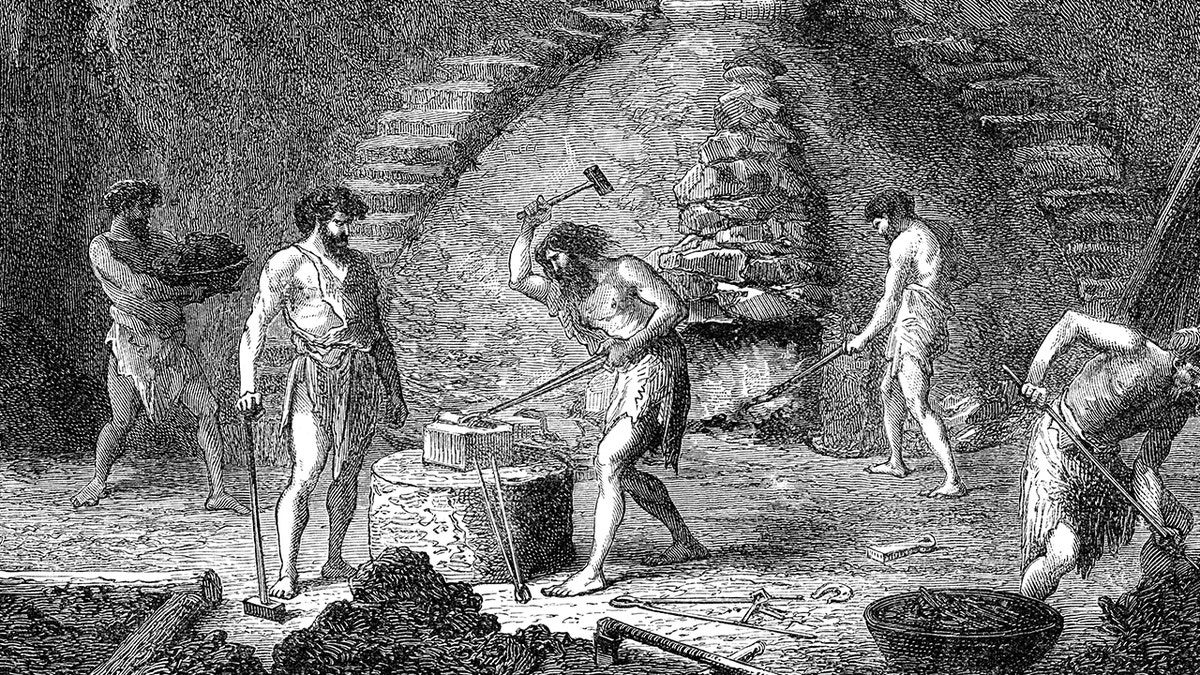
The Iron Age, described above, was often characterized by military power, expanding trade networks and religious rituals, which archaeologists say was on full display at the Hedegaard settlement in Denmark. (Central Jutland Museum)
He added: “There is a political elite, huge construction, there are crafts and trade, and of course, it is also a center for practicing worship.”
The official noted that this discovery was only possible thanks to “talented archaeologists and researchers from Denmark and abroad.”
CLICK HERE TO GET THE FOX NEWS APP
“that it A wonderful privilege “To allow them to work with a discovery that has an international dimension,” Olsen said.














Post Comment