Doctors recommend colorectal cancer screening before age 45 for some groups

Adults 65 and younger make up nearly half (45%) of all new cases, a significant increase from 27% in 1995, according to a report from the American Cancer Society.
“Previously considered a disease that primarily affects people over the age of 50, we are now seeing an increasing diagnosis in patients in their 20s, 30s and 40s — making it even more important not to ignore symptoms based on age alone,” Dr. Timothy Cannon, director of the Molecular Tumor Board and co-director of the Digestive Cancer Program at Inova in Virginia, told Fox News Digital.
High rates of fatal cancer before the age of 50 linked to common foods
Official health agencies recommend that CRC screening begin at age 45 and continue until age 75 for adults at “moderate risk.”
Stool-based tests can be used to detect possible changes in blood or DNA Cancer indicators. Depending on the type of stool test, it may be performed every one to three years.

Colorectal cancer is now the leading cause of cancer death in adults under age 50 and the second leading cause of cancer death in the United States. (Istock)
Colonoscopy is Medical procedure It allows the doctor to examine the inside of a patient’s colon and rectum using a thin, flexible tube with a camera at the end. For adults at average risk, a colonoscopy is usually performed every 10 years.
“Colonoscopy remains the gold standard because it not only detects cancer early, but can also prevent it by identifying and removing precancerous polyps,” Cannon said.
James Van Der Beek’s death highlights the high incidence of colon cancer in younger adults
Dr. Michael Martin, a California physician, emphasized that colonoscopy is generally preferred for younger patients who are clearly more at risk.
“Stool-based tests are appropriate screening options for adults with average risk, but are not the best option for people with a significant family history. Inflammatory bowel disease“Genetic syndromes or warning symptoms. If symptoms are present, the goal is not screening but diagnosis, and colonoscopy is usually the most appropriate test,” he told Fox News Digital.
3 reasons to get tested before 45
Doctors may suggest early screening for people who fall into higher-risk groups.
Strong family history
“Family history can make screening earlier and more frequent,” Martin told Fox News Digital.
The American College of Gastroenterology recommends early screening if a first-degree relative is diagnosed Colorectal cancer Or an advanced tumor before the age of 60, or if two first-degree relatives were diagnosed at any age.
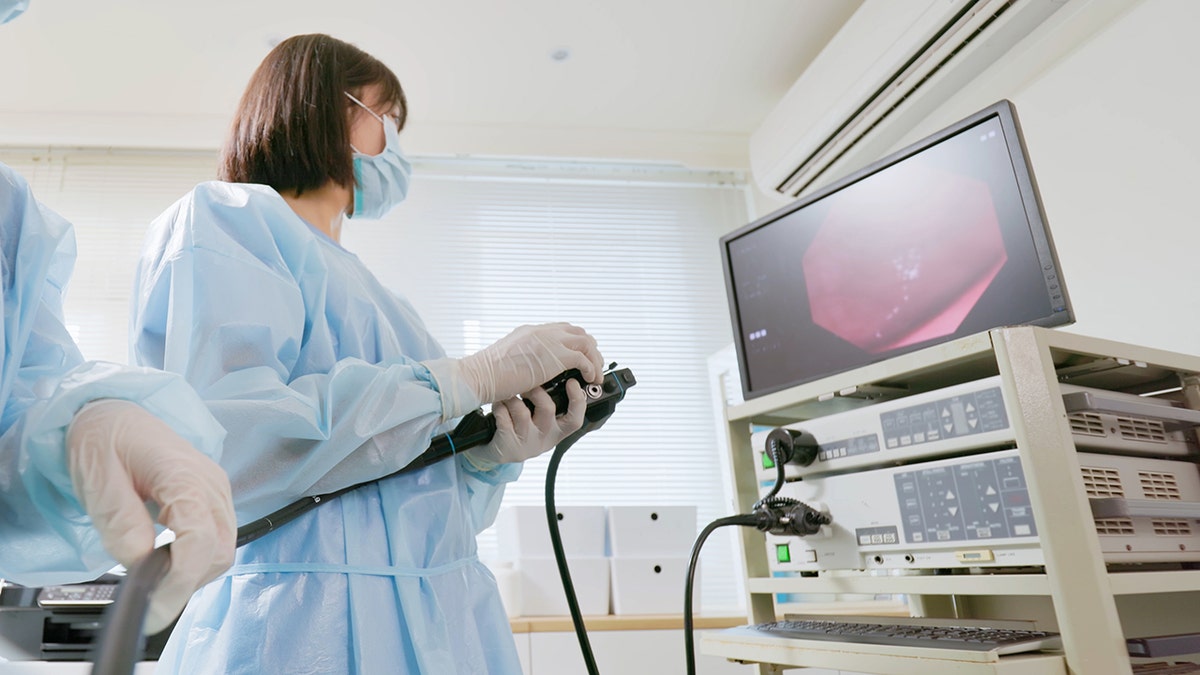
Colonoscopy is a medical procedure that allows a doctor to examine the inside of a patient’s colon and rectum using a thin, flexible tube with a camera at the end. (Istock)
“They should generally start colonoscopy at age 40 or 10 years before the youngest affected relative is diagnosed, whichever comes first,” Martin said. “In this setting, it is generally recommended to repeat the colonoscopy every five years.”
Critical symptoms
Cannon listed the following red flags that warrant early screenings.
Nearly 40% of cancer cases could be prevented through 3 lifestyle changes, study finds
- Rectal bleeding with bright red blood
- Dark or black stools
- Blood in stool
- Constant changes in Bowel habitssuch as new constipation or diarrhea
- Anemia caused by unexplained iron deficiency
- -Continuous abdominal pain or cramps
- Unexplained weight loss
- Constant feeling of incomplete emptying of the bowel
Click here to download the FOX NEWS app
“Although many of these symptoms can be caused by less serious conditions, they should never be ignored,” he said.

Persistent abdominal pain or cramping is one of the warning signs that may require early examination. (Istock)
Rectal bleeding in particular should be taken seriously, even in younger patients, Cannon said.
“Often, symptoms are attributed to hemorrhoids, diet, stress or… Sports activity He pointed out that “any persistent or unexplained bleeding warrants a conversation with a doctor, and in some cases, a colonoscopy.”
“If something is new, ongoing, or concerning, don’t wait. Early evaluation can save your life.”
Some genetic conditions
Some common Genetic syndromes It increases the risk of colorectal cancer and may require early screening.
For example, people with Lynch syndrome — a genetic DNA mutation that greatly increases lifelong risk — should have a colonoscopy every one to two years starting around age 20 to 25 or two to five years before the youngest family case is diagnosed, according to the National Cancer Institute.
The American Cancer Society notes that familial adenomatous polyposis (FAP), another genetic variant, carries a risk of developing thousands of polyps and a lifetime risk of colorectal cancer of nearly 100%. People with FAP are advised to start annual checkups as early as 10 to 12 years of age.
Several other syndromes and genetic variations — including Peutz-Jeghers syndrome, juvenile polyposis syndrome, and MUTYH-associated polyposis (MAP) — can also cause Previous offers.
Inflammatory bowel disease
Those with inflammatory bowel disease (IBD), including ulcerative colitis and Crohn’s diseaseThey face a higher lifetime risk of developing colorectal cancer, according to the Centers for Disease Control and Prevention.
Click here for more health stories
This is largely due to chronic inflammation that causes cellular changes. In this case, the patient may be advised to start colonoscopy examinations before the age of 45 years.
If someone falls into a category that requires early screening before the age of 45, and the screening is normal, the length of time until the next screening will depend on the specific condition. Risk factorsaccording to Martin.
Click here to subscribe to our health newsletter
“If performed because of a strong family history, repeating it every five years is common,” he advised. “If a person turns out not to have colon cancer (or an advanced tumor) and is closer to intermediate risk than high risk, the interval may be longer.”
In many cases, early examinations will be performed Covered by insuranceBut coverage rules can vary depending on whether the test is classified as screening or diagnostic, Martin said.

People with inflammatory bowel disease, including ulcerative colitis and Crohn’s disease, have a higher risk of developing colorectal cancer over their lifetime. (Istock)
“Under federal law, screening tests recommended for average-risk patients are generally covered without cost-sharing, but colonoscopies performed because of symptoms are often considered diagnostic, as mentioned above,” he noted. “This can have an impact on deductibles or copayments. The actual out-of-pocket cost varies by insurance company and plan.”
Cannon stressed that the encouraging news is that colorectal cancer is often preventable.
Test yourself with our latest lifestyle quiz
“Most cancers develop slowly from precancerous polyps over many years,” he said. “Screening allows doctors to detect and remove these benign tumors before they turn into cancer.”
“Key message: If something is new, ongoing or concerning, don’t wait. Early assessment can do that.” Save your life“.














Post Comment