Iran’s drone surge tests US defenses as the Pentagon pushes lasers and multi-layer armor
The United Arab Emirates announced on Tuesday that its air defenses detected nine ballistic missiles and 35 drones launched by Iran. Eight missiles were intercepted and one fell into the sea.
The country said that out of 35 drones, 26 were shot down and nine of them crashed on UAE territory.
The post highlights how the battlefield has been transformed.
Ballistic missiles travel high and fast, allowing long-range interceptors such as the Patriot air defense system and the High Altitude Area Defense (THAAD) system to engage them predictably. Drone swarms, which Iran has increasingly relied on in recent exchanges, present a different challenge to US forces.
They fly lower, move slower, and often arrive in groups, making them harder to detect and more likely to strain defenses designed to confront high-speed threats.
US forces have already been directly affected by unidirectional attack drones in the region. In a March 1 strike near Camp Arifjan in Kuwait, six U.S. service members were killed and dozens injured when an Iranian drone struck a tactical operations center.
Each objection also carries a cost.
Advanced interceptors can cost millions of dollars per shot.
Many of the drones designed to defeat them are much cheaper and produced in large numbers, creating what defense officials have described as a growing “mathematical problem” in modern warfare. The United States could end up launching expensive missiles at relatively inexpensive drones, a dynamic that becomes difficult to maintain if attacks come in waves.
This imbalance is accelerating efforts within the Pentagon to expand a multi-layered counter-drone strategy — combining short-range interceptors with electronic warfare tools and emerging technologies like high-energy lasers.
For US forces in the region, waves of larger drones increase the odds that defenses will be stretched, and even a single drone could reach a base or ship.
This marks the first sustained encounter in which U.S. forces face large-scale waves of state-backed drones as a central feature of the battlefield — forcing commanders to adapt in real time and draw on lessons learned from Ukraine, where mass-produced Shahed drones have reshaped air defense strategy.
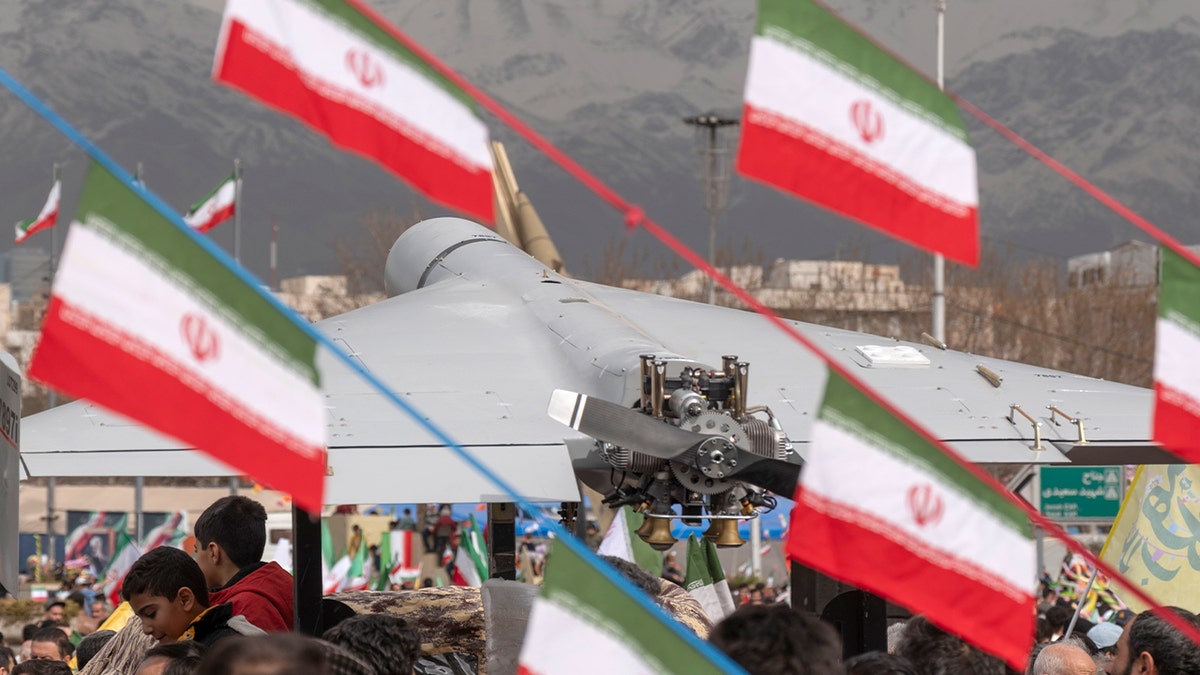
An Iranian-made Shahed-136 drone is displayed at a rally in Azadi (Freedom) Square in Tehran, Iran, February 11, 2026. (Mortaza Nikoubazel/NoorPhoto/via Getty Images)
Lasers and staying power
Among the new American systems attracting renewed interest are high-energy lasers.
Directed energy is being developed and tested for counter-drone missions, and has been used in limited domestic contexts.
we Defense officials say the laser offers a major potential advantage: Once switched on, it can fire repeatedly without consuming conventional ammunition.
Unlike interceptor missiles, which must be replaced after each launch, the laser system can continue to engage targets as long as sufficient power is available. In theory, this provides a sustainable defense capability during large drone waves.
“It’s now a function of our procurement system that we get these things out to the forces as quickly as we can,” said retired Vice Adm. Kevin Donegan, former commander of U.S. Naval Forces Central Command and U.S. 5th Fleet. He told Fox News Digital.
Donegan admitted that this technology is real but has not yet been fully applied in combat zones.
Scaling up high-power systems requires power generation, integration, and infrastructure – all of which takes time.
A US official confirmed to Fox News that digital directed energy systems have been tested and used to counter drones in combat scenarios, and that the Pentagon “continues to work to expand this capability as quickly as possible.”
Central Command, the US military command charged with overseeing the Middle East, declined to comment on whether the laser was part of the current drone defense system against Iran.
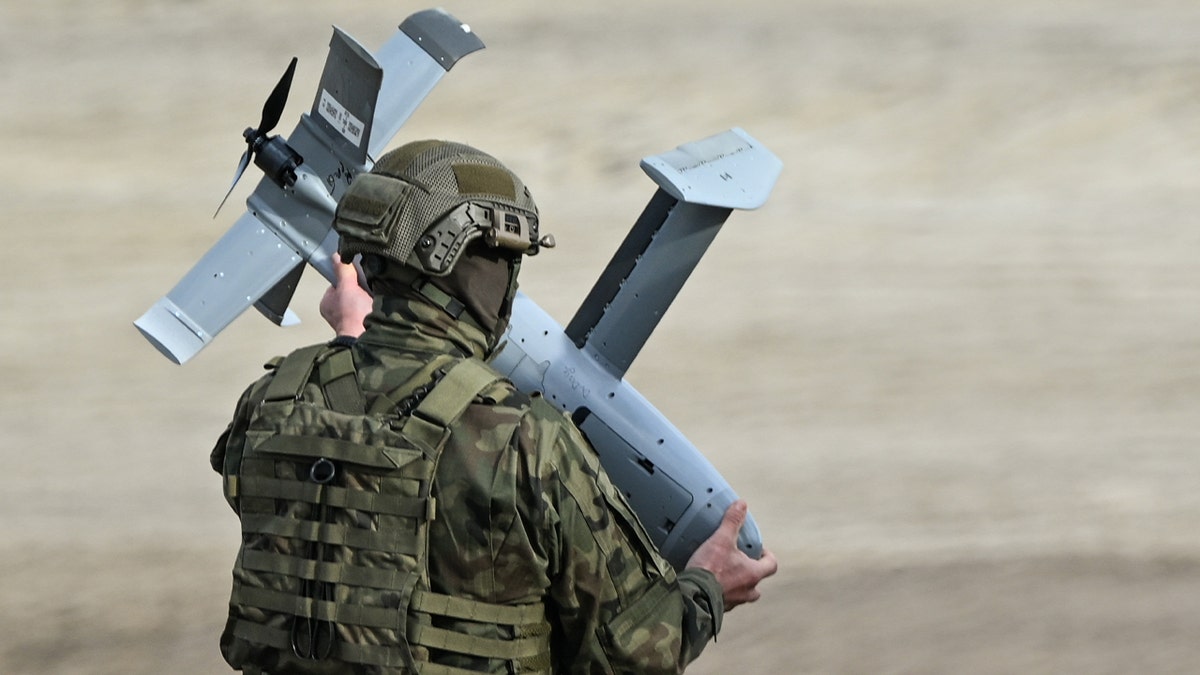
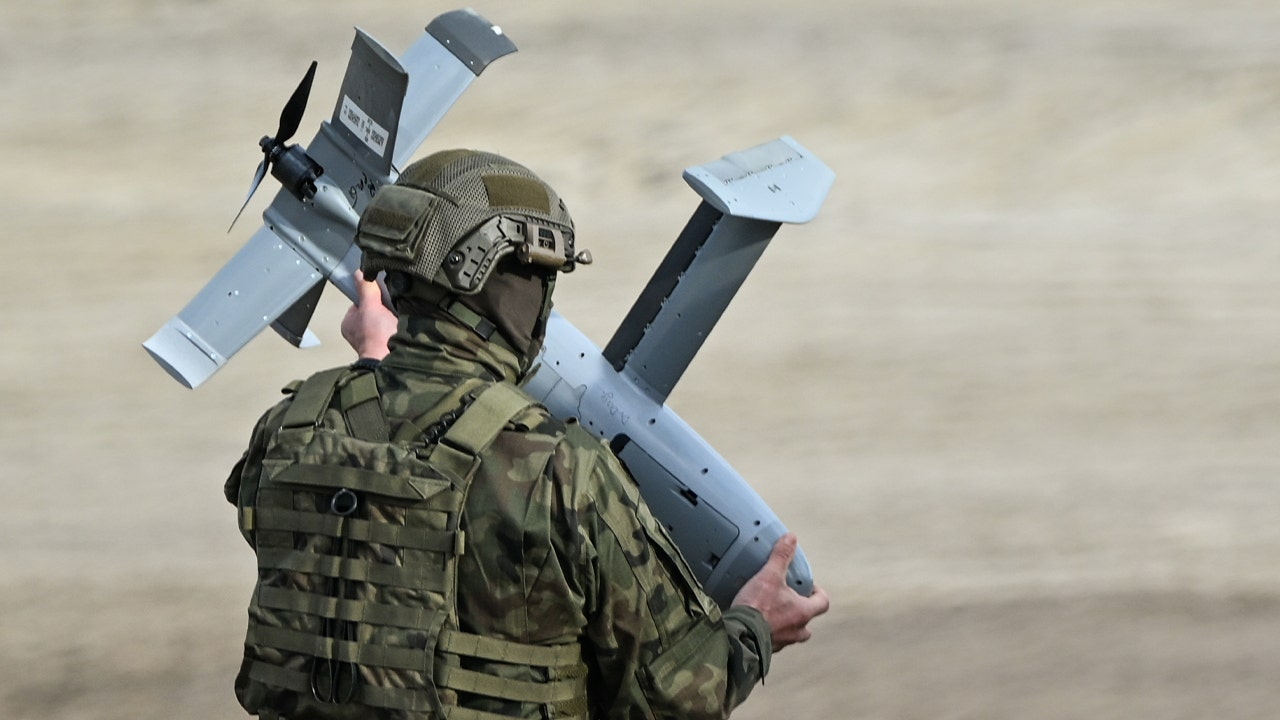
A Polish Army soldier holds an AS3 Surveyor interceptor drone, part of the US MEROPS anti-drone system, during a live fire demonstration at the Deba training grounds in Poland, November 18, 2025. (Tour photo via Getty Images)
Building defensive depth
While lasers represent a long-term development, leaders rely on multiple layers of defense today.
The recent deployment of the Merops interceptor drone at US Central Command reflects this approach.
Developed by US-backed defense company Perennial Autonomy, Merops is a mobile counter-drone system that launches small interceptor drones from a truck-mounted platform to disrupt incoming threats. The system was tested against Shahed drones in Ukraine and was applied in NATO countries such as Poland before being accelerated in the Middle East as drone activity intensified.
An effective counter-drone capability relies on nested systems integrated around high-value targets rather than a single interceptor, said a former defense official familiar with counter-drone operations.
“The effective counter-drone capability overlaps,” the official said. “No single system solves the drone problem alone.”
US ships in the region rely on short-range missile systems such as the Rolling Airframe Missile and Sea Sparrow, along with the Close-In Weapon System, a rapid-fire, radar-guided cannon that can respond to threats at close range.
Ground defenses include radar detection using specialized interceptors such as Raytheon’s Coyote family, designed to defeat small drones. Industry systems like Anduril’s Roadrunner are adding autonomous interceptor drones capable of engaging airborne threats and, in some configurations, returning for reuse.
Success begins with early detection. Radar systems track low-flying drones and give operators time to choose whether to jam, intercept or destroy incoming threats.
“We have built weapons systems for all of our military platforms that have counter-drone combat capabilities,” Donegan said.
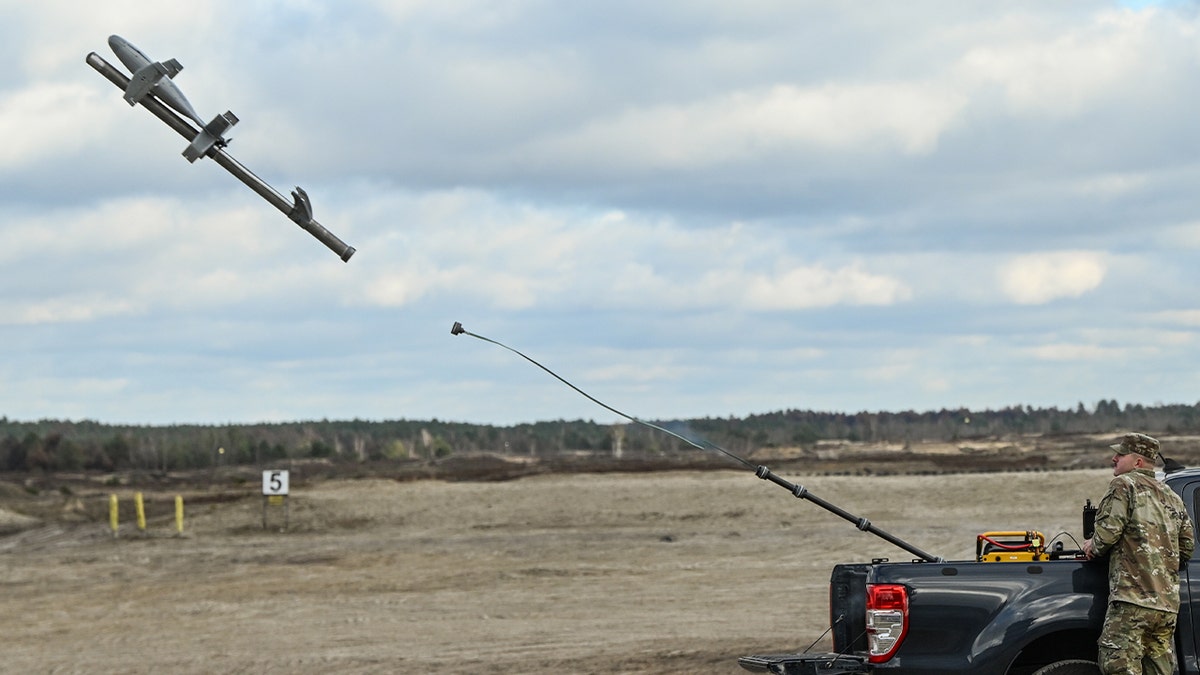
The recent deployment of the Merops interceptor drone at US Central Command reflects this approach. (Wojtek Radwanski/AFP via Getty Images)
Lessons from Ukraine
Iranian Shahed drones have been improved during Russia’s war in UkraineCities faced nightly waves of low-cost attack aircraft in one direction. There, multi-layered defenses that combine short-range interceptors, electronic warfare, and advanced technologies have proven important in absorbing persistent attacks.
Ukrainian officials said some cities encountered more than a hundred drones in a single night, forcing air defense crews to remain on alert for hours at a time.
Ukraine has since offered To share its battlefield experience with the United States and its Gulf partners as Iranian drone activity expands in the Middle East.
Officials say those lessons influence American planning.
“JIATF-401 is accelerating the procurement of multiple anti-drone capabilities across multiple combatant commands, including sensor radars, kinetic interceptors and other available systems, not just Merops, to expand layered defenses in the US Central Command area of operations,” a US official said.
“Some of the capabilities being enhanced to support our warfighters reflect the lessons we are learning and the technology we are transferring from the battlefield in Ukraine.”
Click here to download the FOX NEWS app
The result is expanded defensive depth – designed to absorb and defeat the threat Inexpensive and continuous It has become increasingly central to modern warfare.
For the forces stationed at those bases and aboard those ships, this layered defense is what stands between a drone intercepted in the sky and one that reaches its target.
As drone production volumes and tactics evolve, the competition between low-cost attack drones and layered air defenses in Iran shapes the future of warfare itself.













Post Comment